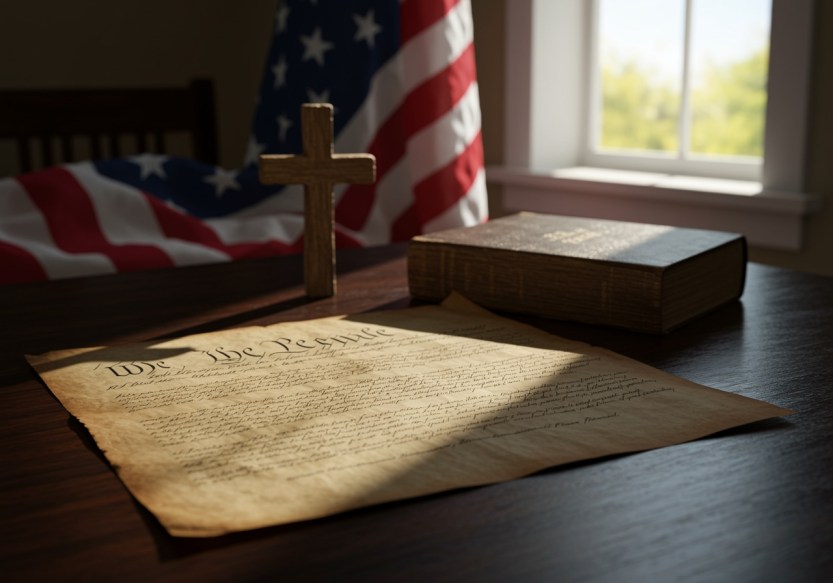
“Proclaim liberty throughout the land to all its inhabitants.” — Leviticus 25:10
As we commemorate the birth of our nation, it’s easy to get lost in the fireworks, the flag-waving, and the festivities. But July 4th is not simply a day for celebration; it is a call to remembrance. Real liberty is never cheap. Our Founding Fathers understood this. Many paid dearly for the freedoms we now take for granted so easily. And at the core of their resolve was a deep conviction in the providence of God and the moral framework of Scripture.
A Declaration That Cost Everything
When 56 men signed the Declaration of Independence, they did so with their eyes wide open. John Adams wrote to his wife Abigail, “I am well aware of the toil and blood and treasure that it will cost us to maintain this Declaration.” These were not idealistic dreamers; they were principled men who believed in something greater than themselves. Many of them were steeped in the Scriptures, shaped by a Christian worldview that saw liberty as a gift from God, not a privilege granted by kings.
The very Declaration begins by appealing to “the Laws of Nature and of Nature’s God” and ends by “appealing to the Supreme Judge of the world” and placing firm “reliance on the protection of Divine Providence.” That’s not vague deism. That’s conviction. And it cost them. Five were captured by the British and tortured. Twelve had their homes ransacked and burned. Nine died from wounds or hardships of the war. They weren’t just signing a document; they were pledging their lives, their fortunes, and their sacred honor.
Liberty Is a Biblical Principle
Biblical liberty is not the freedom to do as one pleases—it’s the freedom to do what is right. Paul reminded the Galatians, “For freedom, Christ set us free. Stand firm, then, and don’t submit again to a yoke of slavery” (Galatians 5:1, HCSB). This echoes not just spiritual freedom from sin but the moral responsibility that comes with being set free.
Liberty, biblically understood, is always tied to responsibility. The Israelites were delivered from Egypt not merely to wander in the desert but to serve the Lord in freedom (Exodus 8:1). Likewise, our Founders believed that true civil liberty could not be sustained apart from virtue. As John Adams warned, “Our Constitution was made only for a moral and religious people. It is wholly inadequate to the government of any other.”
Christian Conscience and Civic Courage
The early American vision was saturated with the biblical idea of ordered liberty, of freedom under God’s authority. Many of the founders, including Samuel Adams, Patrick Henry, and Benjamin Rush, were outspoken believers who viewed their civic duty through the lens of Christian conscience. Patrick Henry famously declared, “It cannot be emphasized too strongly or too often that this great nation was founded… not by religionists, but by Christians.”
This doesn’t mean they got everything right. No human government ever does. But they labored, bled, and sacrificed in pursuit of a vision rooted in transcendent truth, not cultural consensus. They were not afraid to defy tyrants because they feared God more.
Our Responsibility Now
We live in a time when liberty is being redefined, often detached from virtue, truth, and the fear of God. Our task is not to idolize America but to steward the freedom we’ve been entrusted with for the glory of Christ and the good of others. “Live as free people,” Peter tells us, “not using your freedom as a cover-up for evil, but as God’s slaves” (1 Peter 2:16).
Let us honor those who laid the foundation of our freedoms and who have fought to maintain them through the years—not only with gratitude but with godly resolve. We must proclaim liberty not as self-expression but as the fruit of righteousness. Freedom without a moral anchor becomes chaos. But freedom under Christ is life-giving and enduring.
This Independence Day, may we remember: the truest freedom is not found in self-rule but in Christ’s rule. And it is for this freedom that we must stand; not just on July 4th, but every day we are given breath.
“Now the Lord is the Spirit, and where the Spirit of the Lord is, there is freedom.” — 2 Corinthians 3:17
 Words Matter: Refining the Conversation